
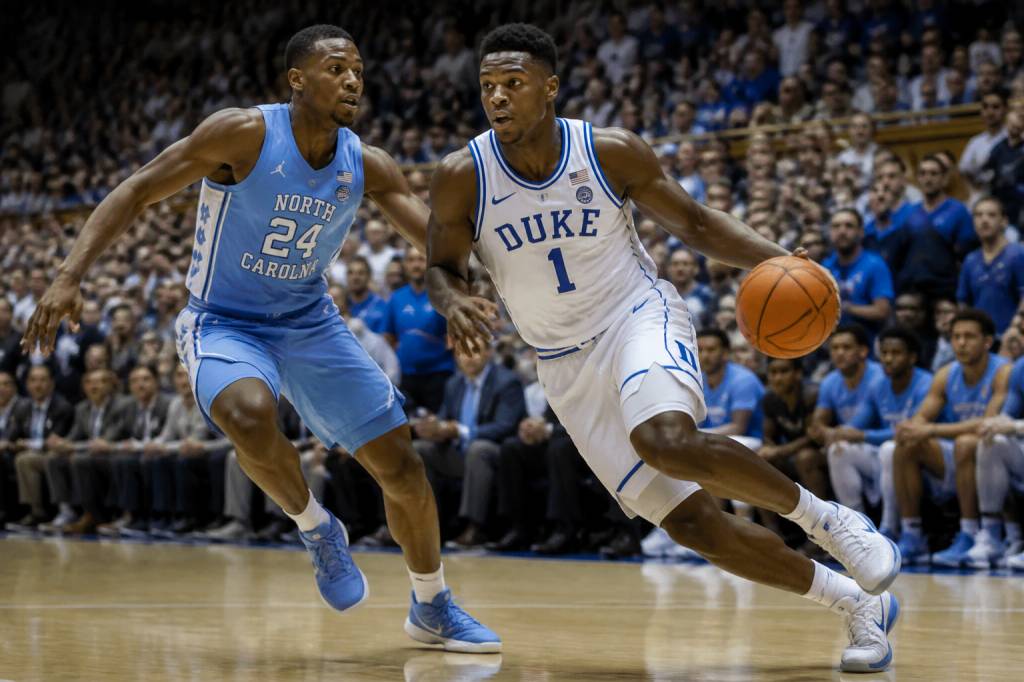
Why the NCAA basketball TV schedule matters more than ever
College basketball has a rhythm all its own. One night you get a frantic Big East grinder in a packed arena, the next you’re watching a mid-major with a point guard who seems determined to turn a Tuesday into a personal highlight reel. That’s the magic of the NCAA calendar: it rarely gives you the same flavor twice.
For fans trying to keep up, the basketball NCAA TV schedule is the map that makes sense of the chaos. It tells you where the best games live, which networks matter on each night, and how to avoid the classic mistake of discovering a thriller only after the final buzzer. If you love college hoops, staying on top of the weekly TV slate is not just convenient. It is part of the experience.
Unlike the NBA, where games often settle into a predictable nightly drumbeat, NCAA basketball spreads its drama across conferences, time zones, and broadcasters. One week may be loaded with blue-blood matchups; another may hide the best game in the country on a streaming service at 11 p.m. ET. That unpredictability is frustrating, yes, but it is also the sport’s secret weapon.
How the weekly NCAA basketball TV schedule usually works
College basketball television is built around a layered broadcast ecosystem. The biggest games land on national TV, but a huge number of excellent matchups are distributed across conference networks and streaming platforms. The result? There is almost always something worth watching, if you know where to look.
On a typical week, the schedule is shaped by a few constants:
- Monday to Thursday: heavy on conference play, especially in January and February.
- Friday: often lighter, but useful for catching ranked teams or rivalry games.
- Saturday: the centerpiece of the week, with wall-to-wall games from lunch to late night.
- Sunday: packed with showcase matchups, especially in the second half of the season.
Early in the season, the calendar is dominated by nonconference showcases, tournaments, and feast-week events. Later, the weekly slate becomes a relentless march through league play. That is where standings tighten, bubble dreams wobble, and every possession starts to feel like it weighs a little more.
The main TV and streaming platforms to follow
If you want to watch NCAA basketball live, you need to know the key broadcasters. The exact rights vary by conference and game window, but the core landscape is relatively stable.
- ESPN and ESPN2: major national games, high-profile conference matchups, and plenty of late-night coverage.
- ESPNU: a treasure chest for college hoops diehards, especially for mid-tier conference games.
- SEC Network: essential for Southeastern Conference fans.
- Big Ten Network: a must for Big Ten coverage, including plenty of physical, tactically rich games.
- FS1 and FOX: key national windows and high-end Big East, Big 12, and Big Ten action.
- CBS and CBS Sports Network: select marquee games and postseason-style broadcast treatment.
- ACC Network: your gateway to ACC hoops, from powerhouse clashes to sneaky road tests.
- Peacock, Paramount+, and other streaming platforms: increasingly important for exclusive games and overflow inventory.
The modern reality is simple: if you only check one channel, you will miss games. The most interesting matchup of the night might not be on the biggest network. Sometimes it is buried on a conference feed, where a scrappy underdog is trying to shock a ranked opponent in front of 8,000 roaring students and one very nervous head coach.
What a full week of college basketball watching looks like
Let’s break down how to approach the week like a properly informed fan, not someone doom-scrolling between score updates and asking, “Wait, this game is on where?”
Monday and Tuesday: the hidden value nights
These are often the most underrated days on the schedule. The national spotlight is lighter, which means conference games get room to breathe. You’ll see plenty of Big Ten, ACC, AAC, Atlantic 10, and Mountain West matchups, often on ESPN family networks or conference channels.
Why care? Because these are the games where tournament résumés are built in the margins. A team that wins a gritty road game on Tuesday may be telling us more about March than a flashy neutral-site blowout in November. If you enjoy scouting for next-level talent or tracking bubble teams, these nights are gold.
Tuesday in particular can be a fantastic basketball night. The cadence is quick, the stakes are usually real, and the games often run with just enough unpredictability to keep you glued to the screen.
Wednesday and Thursday: conference pressure intensifies
By midweek, the schedule starts to sharpen. This is where the grind of conference play begins to show its teeth. Rivalries get testier. Defenses get tighter. Coaches shorten rotations. Suddenly, every possession matters.
Wednesday can be especially rich in Big 12 and SEC action, while Thursday often brings strong national TV windows. If you are looking for games with postseason implications, this is the stretch that delivers them in abundance.
There is also a subtle beauty to these evenings. A ranked team playing on the road against a hungry opponent, a student section sensing blood in the water, a final two minutes played like a chess match with stopwatches and sweat. That is classic college basketball theater.
Friday: the perfect appetizer
Friday nights may not always be overloaded, but they serve an important purpose. They let fans ease into the weekend slate without suffering through decision fatigue. A few high-quality games, a showcase broadcast, maybe a rivalry tilt, and suddenly the basketball mood is set.
For casual viewers, Friday is a friendly entry point. For committed fans, it is the warm-up lap before Saturday’s marathon. If a ranked team is on the road on a Friday night, pay attention. Those games often produce weird, wonderful results.
Saturday: the centerpiece of the college basketball week
If one day defines the NCAA basketball TV schedule, it is Saturday. This is when the sport opens its arms and says: stay awhile.
You will find early tip-offs, overlapping windows, and a flood of regional and national broadcasts. From breakfast basketball to late-night finishes, Saturday gives you the full spectrum of college hoops emotion. It is also where conference races begin to harden into something more meaningful. A team that survives a tough road game at noon can look completely different by the evening.
To navigate Saturday intelligently, think in layers:
- Start with the top-25 or rivalry games in the early window.
- Keep an eye on conference games with tournament implications.
- Use the mid-afternoon slot to sample an upset candidate or an elite defensive battle.
- Save one late game for the chaos factor, because every Saturday deserves at least one unexpected plot twist.
The best Saturdays feel like a festival. One game can be a shootout, another a trench war, another a showcase for a future NBA guard who seems to have arrived with a mission statement. If you are serious about college basketball, Saturday is your battlefield.
Sunday: the closing act with real stakes
Sunday often brings a different tone. The broadcast windows are strong, the matchups are polished, and the stakes are usually creeping higher as the season advances. You may see more ranked-vs-ranked games, plus key conference tests that shape seeding projections.
This is also a good day for fans who want a more curated viewing experience. The slate may be smaller than Saturday’s monster menu, but the quality can be excellent. Sunday tends to reward close attention, especially when teams are entering the final stretch before tournament season.
Which conferences give the best weekly viewing value?
Not all leagues are created equal when it comes to television. Some conferences are loaded with depth, some with star power, and some with pure stylistic drama. If you are building a weekly watch list, these are the conferences that usually pay off.
- Big 12: physical, fast, and often brutal. Rarely a dull possession.
- Big Ten: half-court discipline, size, and plenty of close finishes.
- SEC: rising athleticism and high-end individual talent.
- ACC: a mix of traditional powers and teams trying to rediscover their edge.
- Big East: intense environments and compact, high-stakes games.
- Mountain West: one of the best sources of late-night drama and tournament sleepers.
If you have only a couple of hours to watch each week, these conferences are often the most efficient route to quality basketball. They also tend to produce the kind of games that stay with you: buzzer-beaters, comeback runs, defensive stands that feel like acts of defiance.
How to build your personal weekly viewing guide
The best way to manage the NCAA basketball TV schedule is to build a system that matches your habits. You do not need to watch everything. You just need to watch smart.
Here is a simple approach:
- Pick one national game that you will definitely watch each night.
- Choose one conference battle from a league you follow closely.
- Keep one upset watch from a lower-profile matchup or streaming-only game.
- Track ranked teams on the road, because those games tend to tell the truth.
- Check tip-off times early, especially when games are spread across time zones.
This method keeps you from getting overwhelmed. It also helps you watch with purpose. Instead of bouncing randomly between channels, you create a small, high-value slate that reflects what matters most to you.
What makes live college basketball better than highlights
Highlights are useful, sure. But they only give you the final spark, not the full fuse. Live college basketball is about tension: the building pressure of a comeback, the adjustment after a timeout, the emotional swing when a road team silences the crowd with a three-pointer in the corner.
That is why the TV schedule matters so much. It is not just a list of broadcasts. It is access to the sport’s heartbeat.
Watch long enough, and you start to recognize the patterns. A veteran coach taking away the opponent’s first action. A freshman guard suddenly realizing the arena is louder than every gym he has played in before. A packed home crowd turning a January game into something that feels, for one night, like March.
Those moments do not always show up in the box score. But they are there, waiting on the broadcast.
Practical tips for never missing the best games
In a sport with so many moving parts, a little organization goes a long way. If you want to stay current without turning your week into a full-time job, these habits help:
- Set alerts for your favorite teams and conferences.
- Check TV listings the morning of each game day, not just the night before.
- Use streaming apps that allow quick channel switching and game replays.
- Follow a trusted weekly schedule roundup so you can spot premium matchups fast.
- Watch the second half if you only have time for one slice of the action; that is where the tension usually peaks.
And if you are following a specific team, remember that not every important game is a rivalry or a ranked showdown. A random Wednesday road trip to a tough gym can matter just as much. Sometimes more.
Why this weekly guide is worth keeping close
The NCAA basketball season is a marathon made of sprints. Games arrive quickly, storylines change faster than coaches can draw up a baseline out-of-bounds play, and the television landscape shifts from week to week. That is exactly why a reliable weekly guide is so valuable.
It helps you separate the essential from the merely noisy. It reminds you where the real stakes are. And it lets you enjoy the sport the way it was meant to be enjoyed: live, in the moment, when a single possession can flip a season’s mood from optimism to panic or from doubt to belief.
So when you sit down to scan the upcoming NCAA basketball TV schedule, look beyond the obvious national showcase. Check the conference clashes. Keep an eye on late-night windows. Follow the teams with something to prove. That is where the best stories usually hide.
Because in college basketball, the game you did not plan to watch is often the one you remember longest.




More Stories
Channels for nba games today: how to find live broadcasts and streaming options
Australian Open tennis TV schedule for 2026: dates, channels and live streaming options
How Immersive Second-Screen Experiences Are Changing Live Sports Consumption